
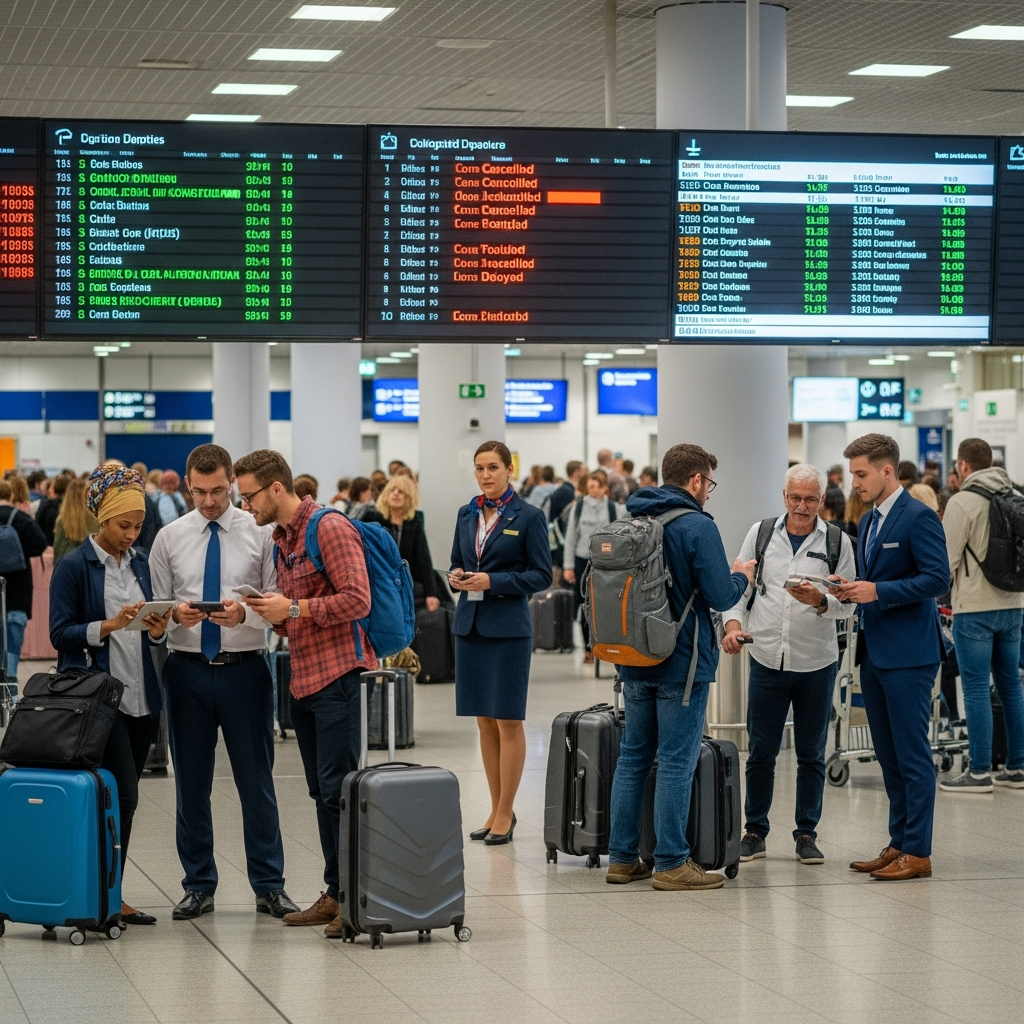

The skies over Europe are once again a source of widespread air travel disruptions, leaving countless travelers stranded. From major international hubs to regional connections, a complex blend of operational hurdles, critical infrastructure failures, geopolitical events, and even labor unrest has triggered significant Europe flight delays and cancellations. This essential guide cuts through the confusion, offering a comprehensive understanding of the current challenges and equipping you with actionable strategies to navigate the uncertainty of European air travel.
The “Perfect Storm” Plaguing European Air Travel
Recent data paints a stark picture of the challenges facing Europe’s aviation sector. March 2026 has been particularly turbulent, dubbed a “perfect storm” of internal labor issues and external geopolitical instability. On one chaotic day, the continent recorded 1,476 flights delayed and 400 cancelled, affecting hundreds of thousands. Another snapshot revealed 342 cancellations and 934 delays across key nations like Germany, France, and the UK, signaling a systemic strain where delays often overshadow outright cancellations. Later in the month, further disruption saw 720 flights delayed and 80 cancelled across Switzerland, Austria, and Spain.
Certain locations consistently bear the brunt of these issues. Berlin-Brandenburg (BER) has frequently been an epicenter, once recording 212 cancellations against only 12 delays. Other severely impacted airports include Paris Charles de Gaulle (CDG), a critical international bottleneck, Frankfurt International (FRA) with high delays, Amsterdam Schiphol (AMS), London Heathrow (LHR), Munich (MUC), Brussels (BRU), Zurich (ZRH), and Vienna (VIE).
Even major European airlines like Lufthansa, Air France, Ryanair, and British Airways contend with immense pressure. While specific incidents have grounded many flights, it’s crucial to note a nuanced reality: some carriers, like British Airways, Wizz Air, Eurowings, SWISS, and Finnair, have maintained remarkable internal punctuality. This often stems from proactive measures such as strategic schedule cuts and temporary route suspensions, particularly to the Middle East, to protect their core networks. However, these adjustments still create a ripple effect across the broader system, impacting passenger options and global connectivity.
Unpacking the Causes: Why Europe’s Skies Are Troubled
The current wave of air travel disruptions is multifaceted, stemming from a combination of operational, technical, and geopolitical factors.
Operational Strain and Airspace Congestion
Europe’s aviation network struggles with significant operational challenges. The sheer volume of air traffic, especially during peak travel periods, pushes existing infrastructure to its limits. This creates a domino effect: a single delay can cascade across the interconnected network. Air traffic management systems often struggle to cope, contributing to prolonged waiting times and reroutes that further compound congestion at already busy hubs. This lack of operational slack makes the system fragile against any unexpected event.
Labor Unrest and Staffing Shortages
A critical factor exacerbating the chaos is ongoing labor disputes and persistent staffing shortages. Germany, for instance, has seen significant industrial action, including a 48-hour pilot strike affecting the Lufthansa Group in March 2026. Such strikes directly lead to mass flight cancellations and further strain an already stretched system, impacting tens of thousands of passengers and creating cascading delays across the continent.
Critical Infrastructure Failures: The Greek Airspace Incident
Beyond general congestion, specific technical failures can trigger acute chaos. On January 4, 2026, Greece’s airspace closed due to a complete loss of radio frequencies. This communications failure between air traffic controllers and aircraft led to widespread cancellations, diversions, and European flight delays, particularly impacting Athens and Thessaloniki. Such incidents highlight the extreme fragility of air travel when essential technical infrastructure falters, demonstrating how a localized problem can quickly lead to continent-wide airport chaos.
Geopolitical Tensions: The Ripple Effect of Airspace Closures
Global events significantly impact European air travel. The US-Israel conflict on Iran, for instance, has caused severe global disruption since the COVID-19 pandemic. Widespread airspace closures across the Middle East (including Iran, Iraq, Kuwait, Israel, Bahrain, UAE, Qatar) have paralyzed major global transit hubs like Dubai. This forces airlines to reroute flights, leading to longer flight times, increased fuel costs, and scattered crew and aircraft. The ripple effect strains the global aviation system, impacting European connections and increasing operational complexity. Some Australian carriers, like Qantas, have even adjusted direct Perth-London flights to include refuelling stops in Singapore to avoid these restricted zones.
The Passenger Experience: Frustration, Uncertainty, and Hidden Costs
The human element of these disruptions is often the most challenging. Thousands of passengers face prolonged waiting times, missed connections, and the sheer uncertainty of reaching their destinations. The impact extends beyond immediate travel plans, often incurring significant inconvenience and additional costs.
Communication Gaps and Missed Connections
A recurring point of frustration for stranded passengers is the lack of timely, clear communication. Many report long queues for updates or rebooking. For those with connecting flights, missed connections add another layer of stress, as securing new flights or accommodations becomes a daunting task amidst the travel uncertainty.
Financial Strain and Insurance Limitations
The financial toll can be substantial. Travelers might face unexpected expenses for backup flights, extended accommodation, and alternative transport. Critically, many standard travel insurance policies do not cover cancellations or delays due to war or geopolitical conflicts, leaving passengers exposed to significant financial loss, as seen with some Australian travelers planning European holidays.
Essential Strategies for Navigating European Travel Disruption
Given the current climate of European flight delays and cancellations, preparation is paramount. Here are practical travel tips for Europe to help minimize impact:
Before You Depart:
Monitor Flight Status Constantly: Check your airline’s app or website frequently, and sign up for real-time alerts. Do this before leaving for the airport.
Pack Smart: Keep essential items, medications, and a change of clothes in your carry-on in case of overnight delays or lost luggage.
Understand Your Rights: Familiarize yourself with EU Passenger Rights (EC 261/2004) and UK261 regulations regarding delays, cancellations, and denied boarding. Knowing these can help you claim compensation or assistance.
Consider Robust Travel Insurance: A comprehensive policy can cover unexpected costs. Be aware of exclusions, especially for disruptions due to war or political instability. Read the fine print carefully.
Don’t Panic-Cancel: If your flight is to an affected region, wait for your airline to officially cancel it. Proactive cancellations by passengers can often nullify your rights to a refund or free rebooking.
During Your Journey:
Arrive Early: Allow extra time for check-in and security, anticipating longer queues and potential operational changes.
Seek Alternatives Proactively: If your flight is cancelled or severely delayed, explore alternative routes or modes of transportation (trains, buses) if feasible. Look for solutions while waiting for airline assistance, even considering secondary airports if major hubs are overwhelmed.
Stay Connected: Ensure your phone is fully charged, and carry a portable charger. Access to communication is vital for updates and rebooking.
Post-Disruption: Exercising Your Rights
Document Everything: Keep meticulous records of flight numbers, delay times, cancellation notices, and any expenses incurred (food, accommodation) due to the disruption. Request written confirmation of the reason for disruption.
Claim Compensation: If eligible under EC 261/2004 or UK261, pursue your compensation rights. Airlines are obliged to offer immediate assistance (food, drink, accommodation) for significant delays, regardless of the cause. Even if “extraordinary circumstances” exempt them from financial compensation, they must still get you to your final destination.
Frequently Asked Questions
Why are European flights experiencing such widespread issues right now?
European flights are facing significant air travel disruptions due to a perfect storm of factors. This includes persistent airspace congestion from high traffic volumes and fragile infrastructure, as demonstrated by the Greek airspace communications failure. Crucially, ongoing labor disputes, like the German pilot strikes in March 2026, and staffing shortages severely impact operations. Adding to this, geopolitical tensions, such as the Middle East conflict, force widespread airspace closures, leading to reroutes, scattered crew, and a ripple effect across global aviation, compounding challenges for carriers connecting to Europe.
How can I best prepare and protect my trip amidst current European flight disruptions?
To best prepare for European flight delays, constantly monitor your flight status via airline apps or websites before heading to the airport. Pack essentials, medications, and a change of clothes in your carry-on for potential delays. Invest in comprehensive travel insurance, but be aware of its limitations regarding war-related cancellations. Most importantly, familiarize yourself with EU Passenger Rights (EC 261/2004) and avoid panic-canceling your flight; wait for the airline to officially cancel to preserve your rights to refunds or rebooking.
What are my passenger rights if my flight in Europe is delayed or cancelled, and how do I claim them?
Travelers within Europe are protected by EU Passenger Rights (EC 261/2004) and UK261 regulations. For delays of three hours or more, or short-notice cancellations, you may be entitled to financial compensation (up to €600, depending on distance and delay length). Airlines must also provide immediate “duty of care” assistance, including meals, refreshments, and accommodation for overnight stays, regardless of the disruption’s cause. Document everything, including expenses and communication from the airline, to support your compensation claim.
Conclusion
Europe’s skies remain in a state of flux, challenging both travelers and the aviation industry alike. The ongoing European flight delays and cancellations are a stark reminder of the complexities of modern air travel, exacerbated by a mix of operational strain, technical vulnerabilities, labor unrest, and global instability. By staying informed, being prepared, and understanding your passenger rights, you can better navigate these challenging times and minimize the impact of air travel disruptions on your journey. Flexibility and quick, informed action are your best allies in ensuring a smoother travel experience across the continent.
“,
“imagegenerationprompt”: “A bustling, slightly chaotic airport terminal in Europe, with diverse travelers looking at departure boards showing delays and cancellations. Emphasize a mood of mild frustration but also resilience. Include elements like airline staff assisting passengers, luggage, and a digital flight display with red or yellow warnings. Use a realistic, cinematic style with moderate lighting and a sense of movement