
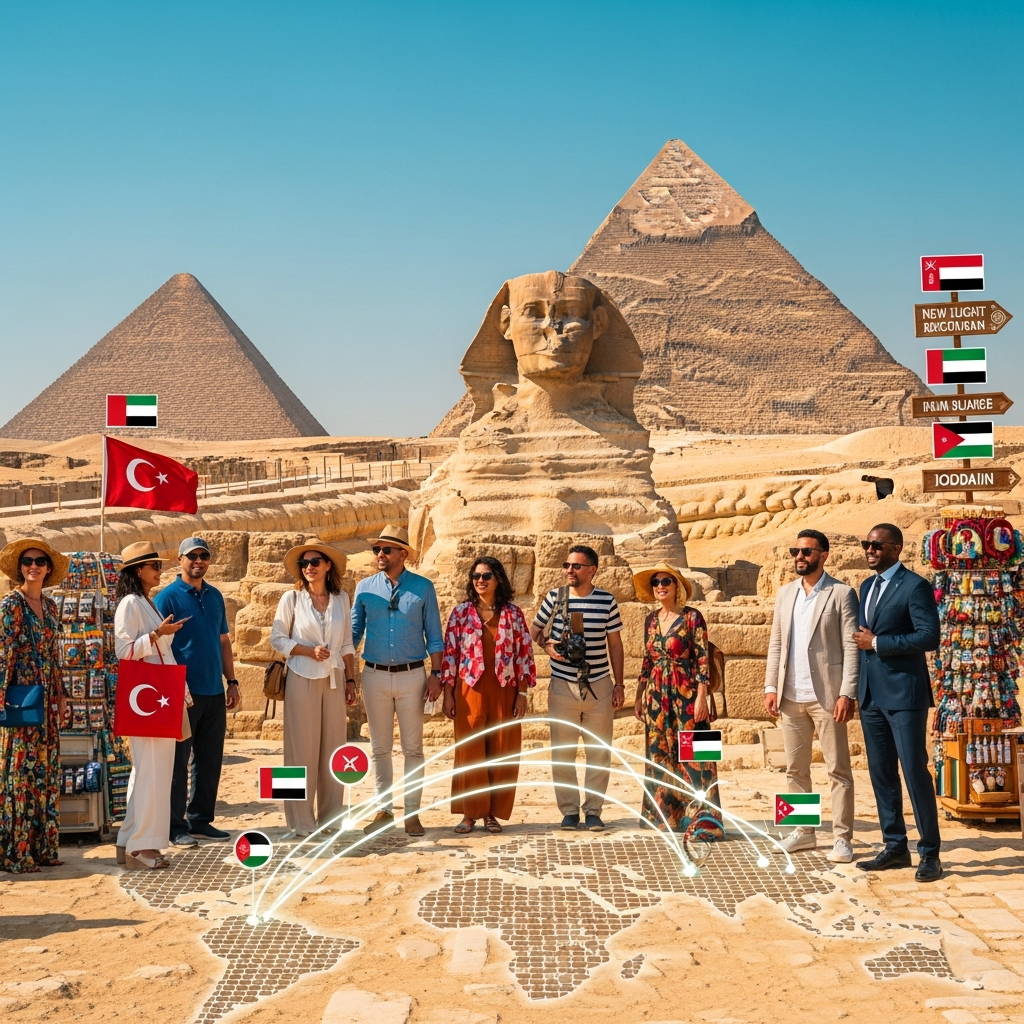

Egypt is actively strengthening its position as a leading global travel destination. Amid a complex regional landscape, the nation is proactively ensuring a safe and memorable experience for every visitor. This multi-pronged strategy involves a robust internal media campaign alongside significant new regional and sustainability partnerships. Together, these initiatives are set to redefine Egypt’s tourism safety narrative and accelerate Middle East travel recovery.
Reassuring Travelers: Egypt’s Proactive Safety Campaign
Recognizing that traveler confidence is paramount, Egypt launched a powerful media campaign on March 13, 2026. This initiative aims to provide real-time assurance to international visitors. It highlights seamless travel experiences and unwavering safety standards. These efforts span across Egypt’s most cherished destinations.
The Power of Authentic Visitor Testimonials
A cornerstone of this campaign involves showcasing authentic visitor experiences daily. Short video testimonials from tourists of various nationalities are shared. These clips appear across multiple digital platforms. They spotlight the peace, security, and warm Egyptian hospitality. This offers a genuine counter-narrative to any regional misconceptions. Travelers consistently share positive journeys. They enjoy Cairo’s vibrant culture and explore the ancient wonders of Luxor and Giza. Many also relax in Sharm El Sheikh’s luxurious resorts. This direct feedback loop is crucial. It offers prospective visitors verifiable insights into Egypt’s visitor experience.
Minister Sherif Fathy personally oversees this content. He ensures testimonials genuinely reflect tourist satisfaction. His direct involvement highlights the Ministry’s commitment. Ahmed Youssef, CEO of the Egyptian General Authority for Tourism Promotion, reiterates a clear message. Egypt is a safe destination, he states. Suzan Mostafa, Head of the Central Department of Tourism Marketing, emphasizes a “live and direct” portrayal of tourism. This fosters confidence despite external tensions.
Forging Unity: The Middle East Tourism Recovery Alliance
Further cementing its commitment to tourism, Egypt officially joined a strategic five-nation alliance. This pact, the Middle East Tourism Recovery Alliance, was formalized on March 19, 2026. It includes Turkey, the UAE, Oman, and Jordan. This marks a unified regional effort to revitalize the travel sector. This collaborative effort emerges amid political instability and economic struggles. Ongoing regional disruptions, like the US-Israel-Iran conflict and frequent flight interruptions, present challenges. However, the alliance aims to strengthen tourism resilience.
A United Front for Regional Revival
This alliance directly addresses a significant downturn in tourism between 2022 and 2025. During this period, combined annual visitor arrivals fell by 28%. Egypt alone experienced a 34% decline. The alliance’s primary goal is ambitious. It aims to recapture pre-2020 visitor levels within 18 months. It also seeks 40% growth across participating nations by 2027. A key feature is a real-time security briefing system among members. This ensures swift, coordinated responses to regional events. The alliance is committed to the long-term growth of the sector. Daily economic losses due to flight disruptions are estimated at nearly $600 million across the region. Tourism, however, supported 2.7 million jobs in 2023, representing 4.1% of the region’s total employment. UNWTO data shows a 3% growth in tourism arrivals in 2025, reaching 96.6 million visitors. The region is projected to grow at a 5.7% compound annual growth rate (CAGR) through 2030.
Enhancing Connectivity and Ease of Travel
Enhanced aviation cooperation forms a core pillar of the alliance. Member airlines, including Emirates, Turkish Airlines, EgyptAir, Royal Jordanian, and Oman Air, are launching 140 new intra-alliance routes. These will be operational by December 2026. Istanbul Airport will serve as a vital European gateway. It will add connections to destinations like Muscat, Aqaba, and secondary Egyptian cities. The UAE’s Etihad and flydubai are also introducing direct services. These will connect to key Jordanian and Egyptian destinations.
Streamlined visa processes are equally crucial for ease of travel. Jordan and Oman will implement mutual 90-day visa waivers for their citizens starting July 2026. Egypt will adopt this policy for alliance members by October 2026. Furthermore, a planned single visa submission for multi-country trips promises unprecedented convenience. This will be phased through Q4 2026. A mileage pooling program across all five carriers is slated for September 2026.
Economic Incentives for Extended Exploration
To encourage longer, multi-country journeys, the alliance partners have introduced several economic benefits:
VAT Refunds: Visitors booking consecutive stays in three or more alliance countries qualify for 25% value-added tax refunds on accommodations.
Development Fund: Egypt and Jordan established a shared $400 million tourism development fund. This fund will upgrade heritage sites and transport links, especially between Petra and Luxor.
Reduced Fees: Oman reduced visa fees by 40%. This applies to travelers with reservations in two other alliance nations.
Digital Payment Wallet: Launching in August 2026, this Mastercard-partnered digital wallet will allow travelers to transact in all five countries without conversion fees. This addresses currency volatility.
Beyond Recovery: Egypt’s Vision for Sustainable Tourism Growth
Egypt’s commitment extends beyond immediate recovery. The nation has also joined a “Unified Eco-Pact” in 2026. This informal alliance with Saudi Arabia and the UAE aims to lead a “game-changing low-carbon tourism front.” It demonstrates Egypt’s dedication to integrating environmental stewardship with economic growth. This pact supports national visions like Egypt’s Vision 2030 and its 2025 strategy, “Egypt — Unmatched Diversity.” These focus on sustainability, digital transformation, and cultural preservation.
Significant progress has already been made. By 2025, 41% of Egyptian hotels adopted clean energy systems. Nearly one-third of diving centers achieved Green Fins certification. Solar energy facilities operate at major archaeological sites. The Giza Plateau is a prime example. Electric shuttle vehicles are used in sensitive areas to reduce emissions. Egypt plans to host 30 million tourists annually by 2030. New investment platforms encourage eco-centric building standards. International cooperation with UNESCO further reinforces efforts. These initiatives preserve cultural sites and promote sustainable heritage management.
Navigating Complex Geopolitics: Egypt’s Strategic Regional Role
Egypt’s proactive stance in tourism must be viewed within its broader strategic context. The nation is also a key player in the emerging “New Red Sea Axis.” This geopolitical alignment, spearheaded by Saudi Arabia and including Turkey, aims to counter rival influences. It focuses on securing the Red Sea, a vital global trade artery. Egypt’s participation, despite historical complexities, underscores its commitment to regional stability. This stability is foundational for a thriving tourism sector.
Furthermore, Egypt is actively involved in Horn of Africa dynamics. Disputes over Nile water, particularly concerning Ethiopia’s Grand Ethiopian Renaissance Dam (GERD), are intertwined with regional alliances. Egypt’s security assistance to Somalia, for instance, is strategically positioned. These complex interactions demonstrate Egypt’s multi-faceted diplomatic efforts. They aim to secure its national interests and foster regional calm, which are crucial for attracting international Middle East travel.
Resilience in Numbers: A Thriving Sector
Despite global challenges, the Middle East’s tourism sector shows remarkable tourism resilience. In 2023, it accounted for 2.7 million jobs. This represents 4.1% of the region’s total employment.
Egypt’s Impressive Growth Trajectory
Egypt experienced a notable tourism boom in 2023. It welcomed 14.9 million visitors and generated $13.6 billion in revenue. This marked an impressive 95% growth. Hotel revenues reached EGP 180 billion. Its iconic historical sites, including the Pyramids of Giza, Temple of Karnak, Valley of the Kings, and the Sphinx, continue to draw travelers. Stunning Red Sea resorts also attract visitors. The alliance projects Egypt’s international arrivals to increase from 11.2 million to 19.5 million by 2027.
Regional Partners: Pillars of Strength
Each alliance member contributes significantly to regional recovery:
United Arab Emirates (UAE): A leader in recovery. Dubai saw a 28% increase in inbound tourism expenditure to $51.4 billion in 2023. International visitors rose by 19% to 17.15 million. Hotels maintained a robust 74% occupancy rate. The UAE invested $5 billion in sustainability and attracted $25 billion in tourism FDI. It also issued 5,000 digital nomad visas.
Turkey: Maintains strong appeal and connectivity despite regional tensions. It projects a 5.7% compound annual growth rate (CAGR) through 2030. Leisure travel drives this growth.
Oman: Achieved 77% recovery to pre-pandemic levels in 2023, welcoming 4 million visitors. Ecotourism contributed OMR 450 million to its GDP. The sector generated OMR 1.84 billion overall and supported 140,000 jobs.
Jordan: Experienced a 10% increase in overnight visitors to 5.5 million in 2023. Its sector contributed 14% to its GDP, totaling JOD 2.1 billion. Adventure tourism alone added 3.5%.
Planning Your Middle East Journey
This powerful alliance and Egypt’s proactive media campaign signal a robust future for Middle East tourism. While geopolitical tensions persist, the combined efforts, a joint marketing budget of $920 million by 2027, and commitments to UNESCO World Heritage Site preservation and sustainable tourism certifications are strong buffers. Travelers are encouraged to leverage multi-country packages and new flight routes. Exploring during shoulder seasons can offer unique experiences. Utilizing the new digital payment wallet will offer financial savings. It will also facilitate unprecedented regional exploration. It is advisable to monitor international airspace updates from organizations like IATA. Always check advisories from authorities like the FAA due to ongoing regional dynamics. Choosing eco-certified accommodations and supporting local communities can further enhance your trip.
Frequently Asked Questions
What is the Middle East Tourism Recovery Alliance, and what are its key objectives?
The Middle East Tourism Recovery Alliance, established on March 19, 2026, is a strategic partnership. It unites Egypt, Turkey, the UAE, Oman, and Jordan. Its core mission is to revitalize the region’s travel sector after a significant downturn. Key goals include recapturing pre-2020 visitor levels within 18 months and achieving 40% growth by 2027. Initiatives focus on enhancing aviation, streamlining visa processes, and offering economic incentives. The alliance also implements a real-time security briefing system to bolster tourism safety and confidence amidst regional complexities.
How does Egypt’s new media campaign assure travelers about safety amidst regional tensions?
Egypt’s dynamic media campaign, launched on March 13, 2026, directly addresses safety concerns. It showcases real-time video testimonials from satisfied international tourists. These videos highlight positive experiences in popular locations like Cairo, Luxor, Giza, and Sharm El Sheikh. This provides a genuine counter-narrative to regional misconceptions. By featuring authentic visitor journeys and emphasizing warm hospitality, Egypt aims to build traveler confidence. This complements the broader alliance efforts, which include coordinated security responses across member nations.
What practical benefits does the Middle East Tourism Recovery Alliance offer for multi-country travel?
The alliance significantly enhances convenience and value for multi-country travelers. By December 2026, 140 new intra-alliance flight routes will increase connectivity. Streamlined visa processes, including mutual 90-day waivers between Jordan, Oman, and Egypt for alliance citizens, will simplify entry. A single visa submission for multi-country trips is also planned. Economically, visitors can expect 25% VAT refunds on accommodations for consecutive stays in three or more member countries. Additionally, a new digital payment wallet (August 2026) will enable fee-free transactions across all five nations, making Middle East travel more affordable and accessible.
Conclusion
Egypt’s dual strategy of an assertive media campaign and powerful regional alliances is demonstrably working. The nation’s tourism sector is not only resilient but thriving. It attracts millions and contributes significantly to its economy. With enhanced connectivity, streamlined processes, and a unified message of safety and hospitality, Egypt and its partners in the Middle East Tourism Recovery Alliance invite global travelers. They offer an opportunity to experience the region’s rich history, vibrant culture, and unparalleled adventures. Plan your journey to Egypt today and discover a world-class experience that is both secure and unforgettable. Embrace the chance to explore a region committed to sustainable growth and unparalleled visitor satisfaction.