
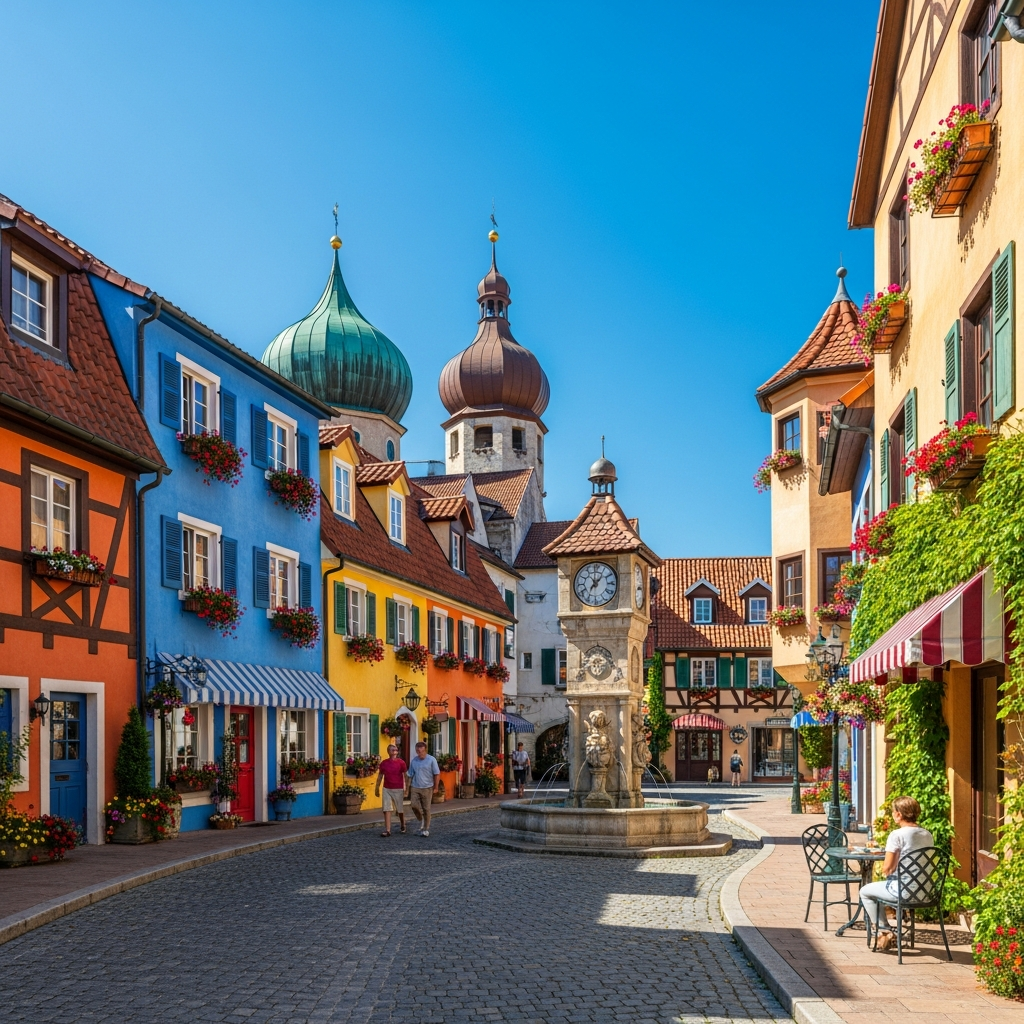

Dreaming of Europe’s historic charm, from Italy’s sun-drenched plazas to Germany’s fairytale villages? Imagine experiencing that same old-world allure right here in the United States. Many captivating US towns that feel like Europe offer rich history, stunning architecture, and vibrant culture, providing an unforgettable, passport-free getaway. These unique destinations, shaped by waves of European settlement and intentional design, prove that a genuine European experience is closer than you think, inviting you to explore historic courtyards, savor culturally rooted cuisine, and wander picturesque streets—all without ever leaving American soil.
Why America Embraces European Charm
Across America, many towns proudly display a distinct European character, a direct legacy of the diverse immigrant communities that shaped them. “Many U.S. towns were intentionally designed and inspired by European architecture, culture, and traditions, whether that’s Bavarian alpine villages, Swiss-inspired mountain towns, or Southern cities with cathedral-lined squares,” explains Fiorella Yriberry, a marketing manager at RVshare. This phenomenon extends beyond mere themed attractions; it represents deeply rooted heritage and a desire for cultural continuity.
From colonial settlements founded centuries ago to modern villages meticulously crafted to echo ancestral homelands, these destinations offer authentic immersion. The enduring human desire for community and cultural connection often leads people to seek out these vibrant, historic locales closer to home. They find a sense of belonging amidst familiar, European-inspired surroundings, as explored by Jennifer Henry in Business Insider regarding finding community in small cities.
Europe itself is celebrated for its immense diversity, allowing for highly personalized trips, as noted by Condé Nast Traveller. Similarly, these European-style towns in America offer a tailored experience, whether you seek the art-rich atmosphere of Vienna, the culinary delights of San Sebastián, or the historical depth of Athens. You can find a microcosm of European experiences without the transatlantic flight.
Journey Through Europe, American Style
Prepare to embark on a captivating tour of the best European-style towns in America, each offering a unique cultural window and demonstrating remarkable old-world charm.
Old England’s Echoes in Boston, Massachusetts
Boston’s deep ties to American history are intrinsically interwoven with its English origins. Founded in 1630 by English immigrants, the city mirrored their former homes across the Atlantic. Susan Wilson, historian for the Omni Parker House, notes, “The town’s earliest homes, meeting houses, public buildings, and public streets reflected those found in London and other old English cities.” For the best glimpse, explore Beacon Hill with its narrow, picturesque streets, Federal-style row houses, and gas lamps, often compared to historic London. Wander down Commonwealth Avenue in the Back Bay, and you might feel transported to Parisian boulevards. Meanwhile, Boston’s North End beckons with its “Little Italy” charm, featuring old-world cafés, pasta restaurants, and pastry shops, maintaining its vibrant Italian identity.
Bavarian Delights in Frankenmuth, Michigan
Thousands of miles from Bavaria’s alpine landscapes, Frankenmuth, dubbed ‘Michigan’s Little Bavaria,’ offers a surprisingly similar experience. Founded in 1845 by German missionaries, their influence remains profound. Michael Keller Zehnder, president of the Bavarian Inn Lodge, highlights how “guests can hear German spoken, explore cultural traditions, and enjoy centuries-old influences.” Onion domes, red roofs, and carved wooden shutters adorn buildings, even extending to local McDonald’s and CVS stores. Look for replicas of Rothenberg and Gunzenhausen’s famous city towers. Savor wiener schnitzel and spaetzle at the Bavarian Inn Restaurant, where staff wear traditional dirndls and lederhosen, truly bringing Germany’s heart to Michigan.
Alpine Adventures in Vail, Colorado
Vail Ski Resort, built in the early 1960s by Peter Seibert and Earl Eaton, drew inspiration from European alpine resorts like Kitzbuehl, Austria, and Zermatt, Switzerland. Its pedestrian-friendly, car-free village evokes a distinctly European feel. “Vail Village still looks and feels like the town center of Kitzbuehl,” observes Johannes Faessler, owner of Sonnenalp Hotels. The village boasts an excellent layout of shops, restaurants, and a vibrant energy that few places, even in Europe, can match. Stay at the Sonnenalp Vail for an authentic European inn experience, complete with Bavarian-style furniture and flower-lined balconies, or enjoy traditional Swiss fondue at its Swiss Chalet Restaurant.
Spanish Colonial Grandeur in St. Augustine, Florida
As the oldest continuously occupied European-established settlement in the U.S., dating back to 1565, St. Augustine is saturated with a Spanish-Moorish past. “Ornate facades, historic courtyards, centuries-old landmarks, walled-in gardens, and pedestrian-friendly streets create an atmosphere more reminiscent of the Mediterranean than a typical Florida beach town,” states Barbara Golden, communications manager for the local VCB. Its 16th-century ambiance is palpable, from the iconic Castillo de San Marcos, a 17th-century Spanish fortress, to Avilés Street, the nation’s oldest thoroughfare. Enjoy authentic tapas and Minorcan specialties, with many culinary offerings paying homage to Spanish roots.
German Gem of the Texas Hill Country: Fredericksburg, Texas
In the heart of Texas, Fredericksburg exchanges barbecue for wiener schnitzel, maintaining a strong German identity since its founding in 1846. “The German community is very strong in Fredericksburg. There are fifth-, sixth-, seventh-generation families that are still living here,” says McKenzie Moellering of Pioneer Museum Fredericksburg. Its historic Main Street, free of chain stores, offers unique shopping and over 120 restaurants. Many serve authentic German cuisine like those at Old German Bakery & Restaurant. Visit during Oktoberfest for polka music and German beer, or stay in a historic ‘Sunday House,’ once second homes for farmers commuting to church.
A Slice of Denmark in Solvang, California
Tucked amidst California’s vineyards, Solvang, meaning “sunny field,” was founded in 1911 by Danish-American educators. Over a century later, it remains authentically Danish. Shelby Sim, CEO of Visit the Santa Ynez Valley, notes, “Visitors can enjoy Danish architecture, bakeries, museums, traditions, and festivals all within a walkable village setting.” Four wooden windmills dot the landscape, alongside half-timbered buildings with thatched roofs. Look for replicas of famous Danish landmarks like Copenhagen’s Rundetårn and the “Little Mermaid” statue. Indulge your sweet tooth with fresh-baked kringle and butter cookies, or enjoy pan-fried meatballs at Bit O’Denmark.
Mediterranean & Coastal European Magic in Florida
Florida truly offers a diverse array of European experiences beyond St. Augustine. For a Greek island vibe, Tarpon Springs, on the Gulf Coast, is a “spitting image of a Greek village,” with its signature white and blue buildings, numerous boats, and authentic Greek cuisine. Its large Greek community along Dodecanese Boulevard makes it a vibrant cultural hub. Further south, Alys Beach in Walton County is meticulously designed with Moorish influences, white buildings, and walkable alleys, evoking a Mediterranean village. Just a few miles away, Rosemary Beach features French-inspired architecture with West Indies and Dutch colonial influences, cobblestone streets, and European-inspired cuisine.
For a direct echo of its Italian namesake, Venice, Florida, in Sarasota County, was intentionally modeled after the legendary city. It features a series of canals and Mediterranean-inspired buildings with red tile roofs and arched windows, transporting visitors to the charm of Italy. For a unique blend of French Riviera and Cuban heritage, Ybor City near Tampa is a vibrant historical district. Founded by cigar manufacturers in 1885, it’s rich with Cuban, Spanish, and Italian immigrant history, offering red-brick streets, colorful buildings, and a thriving authentic Cuban food scene, including the famous Columbia Restaurant.
Historic English Elegance in Charleston, South Carolina
As one of America’s oldest continuously inhabited cities, founded in 1670, Charleston exudes captivating European aesthetics, particularly its British-colonial and Georgian architecture. Stroll past St. Michael’s Church, an 18th-century landmark, and admire Rainbow Row’s pastel-hued townhouses, reminiscent of London’s charming streets. The city’s history is beautifully preserved, offering a genuine glimpse into its European-influenced past, often making visitors feel like they’ve stepped into an old European film set. Its walkable streets and historic districts make it a premier destination for experiencing European charm in America.
Beyond the Postcard: The True Value of Local Communities
While architectural splendor and culinary delights are undeniable draws, the true magic of these European-style towns in America often lies in their vibrant communities. The Business Insider article on finding community underscores a powerful truth: a profound sense of belonging often trumps the allure of distant lands. These U.S. towns, with their walkable centers, local bakeries, and frequent festivals, naturally foster frequent, organic interactions. They offer a unique blend of cultural richness and a tight-knit, supportive atmosphere, where daily errands become opportunities for connection, solidifying a feeling of home and genuine immersion that extends far beyond a themed experience. Places like Lititz, Pennsylvania, founded by Moravians, exemplify this with their deeply rooted historical foundations and community spirit, as noted by WorldAtlas.
Planning Your European Escape, US Edition
Ready to plan your trip to these charming destinations? Many of these US towns that feel like Europe are highly walkable, encouraging exploration on foot, just as you would abroad. Check local calendars for festivals, which are often rooted in European traditions like Oktoberfest or Danish holidays, offering vibrant cultural immersion. From authentic German breweries to Danish bakeries and Spanish tapas bars, the cuisine is a definite highlight. Consider visiting during the shoulder seasons for pleasant weather and fewer crowds, allowing for a more intimate experience of these unique cultural enclaves. Embracing off-season travel, much like in Europe during winter, often means lower room rates and fewer tourists, as highlighted by The Times.
Frequently Asked Questions
Why do certain US towns have such strong European influences in their design and culture?
Many U.S. towns showcase profound European influences due to their historical origins and intentional development. Early European immigrants, such as the German missionaries in Frankenmuth, Michigan, or the Spanish settlers in St. Augustine, Florida, often modeled new communities after their homelands. This included incorporating specific architectural styles, urban planning, and cultural traditions. Over time, communities continued to preserve or even enhance these heritages, sometimes to honor their founders or to create unique cultural destinations. Experts like Fiorella Yriberry confirm these are often authentic reflections of history, providing genuine European charm in America through continuous preservation and community pride.
Which U.S. towns offer the most authentic German or Bavarian experiences?
For an authentic German or Bavarian experience, several U.S. towns stand out. Frankenmuth, Michigan, known as ‘Michigan’s Little Bavaria,’ is a top destination, famous for its distinctive onion domes, traditional architecture, and German cuisine at venues like the Bavarian Inn Restaurant. Fredericksburg, Texas, deeply rooted in German heritage, offers a unique Main Street with German bistros, and hosts an annual Oktoberfest. Additionally, Lititz, Pennsylvania, founded by Moravians, offers a peaceful atmosphere with half-timbered buildings and a strong historical presence, evoking a small German town feel, as highlighted by WorldAtlas. These towns truly allow you to travel Europe without a passport and immerse yourself in German culture.
How do visiting these European-style US towns compare to actual European travel for a cultural getaway?
Visiting these European-style towns in America is an excellent and often more accessible alternative to international travel, especially for cultural immersion without the logistical challenges and expense of crossing the Atlantic. They offer genuine history, architecture, and cuisine that authentically reflect various European cultures, as seen in Solvang, California (Danish), or St. Augustine, Florida (Spanish). While they can’t replicate the full breadth of a continent, they provide distinct, localized cultural experiences. This option allows for richer exploration of domestic heritage, often supports local economies, and can be particularly appealing during off-peak seasons, providing a more intimate, culturally rich getaway right in your own backyard.
Discover Europe in Your Backyard
The allure of Europe is undeniable, but your next European-inspired adventure might be closer than you think. From the historic cobblestones of Boston to the alpine peaks of Vail and the sunny Danish streets of Solvang, the United States offers a diverse tapestry of towns steeped in old-world charm. These destinations provide not only a feast for the eyes and the palate but also a deep connection to the immigrant stories and intentional designs that built them. So, pack your bags, but leave your passport at home, and embark on a journey to discover the captivating US towns that feel like Europe – where history, culture, and community converge for an unforgettable American experience.